

Titanium Selenium Solar Panels: 2025 – Future of Solar Energy
Titanium Selenium Solar Panels
For decades, the solar business has operated under the tenet that silicon is invincible. Solar farms, satellites, rooftops—silicon is ubiquitous. However, experts in Japan’s sophisticated research facilities are covertly violating that regulation. They are posing the daring idea, “What if the future of solar energy doesn’t rely on silicon at all?” rather than continuously refining silicon.
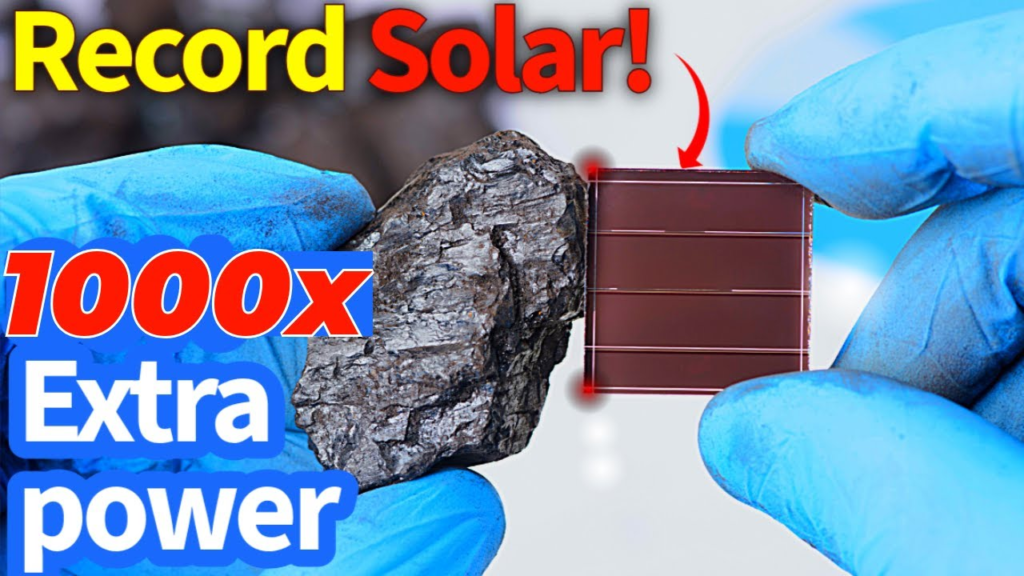
Titanium Selenium Solar Panels, an experimental solar technology that combines lost solar history with contemporary material science, are the result of this inquiry.
Together with titanium dioxide, a substance renowned for its durability and resilience, selenium, which was formerly utilized in the earliest solar cells in history, is being revived.
The goal of Titanium Selenium Solar Panels is lofty: more accessible renewable energy, less of an influence on the environment, and new avenues for solar innovation, even though the efficiency figures are now low.
Today’s solar panels won’t be replaced with titanium selenium panels. They aim to reimagine what solar technology might develop into in the future.
⚡ What Are Titanium Selenium Solar Panels?
Advanced research, mostly in Japan, led to the development of titanium selenium solar panels, an experimental thin-film photovoltaic technology. These panels use a heterojunction structure created between crystalline silicon and:
Titanium dioxide (TiO₂) is a robust semiconductor that resists corrosion.
A potent light-absorbing material with a lengthy history in photovoltaics is selenium (Se).
A new kind of solar cell design is produced by this combination. needed to explore alternative materials, safer chemistry, and future-ready manufacturing, rather than immediate commercial dominance.
🧠 How Titanium Selenium Solar Cells Work (Step by Step)
Let’s take a straightforward approach to Titanium Selenium Solar Panels:
The coating of titanium dioxide allows sunlight to enter the cell.
Selenium absorbs photons that come in.
Light energy produces pairs of electrons and holes.
At the titanium-selenium interface, an inherent electric field develops.
Electricity is created as electrons move between electrodes.
For more such interesting articles, please click to our website: https://digiknowledge.co.in/
🔌 Key Performance Indicators (Current Prototype)
- Efficiency: ~4.49%
- Open Circuit Voltage: ~0.79 V
- Short Circuit Current Density: ~11 mA/cm²
These numbers are modest when compared to commercial panels, but they are not a final product; rather, they are a first-generation experimental success.
🕰️ A Brief History: Selenium’s Return to Solar Energy
Silicon was not the first material used in solar technology.
In the 19th century, selenium was utilized in some of the first solar cells.
Later, silicon took its place because of its greater scalability and efficiency.
Selenium is currently being revisited in modern research employing cutting-edge engineering.
A turning point in the development of photovoltaics is represented by titanium selenium solar panels, which combine early solar materials with contemporary scientific accuracy.
🇯🇵 Why Japan Is Investing in Titanium Selenium Technology
Japan’s emphasis on this technology is consistent with their long-term energy strategy:
Restricted land availability
high reliance on energy imports
A focus on advanced material science
Japan’s demand for innovation is aligned with the potential benefits of titanium selenium panels in terms of material safety, durability, and lightweight design. ative and resilient energy solutions.
⚔️ Comparison: Titanium Selenium vs Other Solar Technologies
🧱 Silicon Solar Panels
- Efficiency: 18–23%
- Highly reliable and mass-produced
- Energy-intensive manufacturing
- Recycling challenges
🌈 Perovskite Solar Cells
- Extremely high lab efficiency
- Lightweight and flexible
- Stability and toxicity concerns
- Not yet fully commercial
🧬 Titanium Selenium Solar Panels
- Efficiency: ~4.49%
- Environmentally safer material profile
- High research cost today
- Focused on future innovation
The most important lesson is that titanium selenium panels are experimental alternatives that are investigating new solar directions rather than rivals.
💰 Cost Challenges and the Yttrium Question
💸 Why Costs Are High
- Titanium extraction is energy-intensive
- Selenium is limited in supply
- Manufacturing requires high material purity
🧪 Role of Yttrium
Yttrium has been explored to:
- Improve electrical behavior
- Optimize manufacturing processes
Nevertheless, incorrect handling could result in yttrium contamination, which can:
- Reduce long-term stability
- Create environmental contamination risks
- Increase waste management complexity
It’s still quite difficult to strike a balance between environmental safety and performance enhancement.
🌍 Environmental Impact: Is It Truly Green?
✅ Environmental Advantages
- Titanium dioxide is chemically stable
- Selenium is less toxic than heavy-metal alternatives
- Potential for lower carbon manufacturing in the future
⚠️ Environmental Concerns
- Mining impacts for selenium and yttrium
- Recycling systems still under development
As long as sustainable supply is guaranteed, titanium selenium solar technology exhibits great environmental promise overall.
🚧 Major Challenges Slowing Adoption
Despite its potential, this technology has several challenges:
Low efficiency in contrast to current panels
Scaling from lab to mass manufacturing can be challenging.
Long-term durability is still being tested.
Perovskite and silicon technology are fierce competitors.
This is not consumption but serious research innovation. r-ready solar hardware.
🔮 Future Potential: Where Titanium Selenium Could Shine
Titanium selenium panels may find value in specialized applications, such as:
- Space and satellite systems
- Low-light or controlled environments
- Tandem solar cell layers
- Lightweight electronic devices
- Advanced photovoltaic research platforms
Innovation often begins in niches before reshaping entire industries.
🎤 Final Verdict: Why Titanium Selenium Solar Panels Matter
Although the efficiency of titanium selenium solar panels is now only 4.49%, their significance goes beyond statistics. They push solar research into uncharted terrain, question established beliefs, and investigate safer material approaches.
Today is dominated by silicon.
Perovskites pursue the immediate future.
What happens next, Titanium Selenium wonders?
And sometimes the most significant advancements in the race for inexpensive, renewable energy start with the guts to think outside the box rather than speed. 🌞


